The HydroProCera project is being carried out by a consortium of four partners:
- Faculty of Chemistry at Warsaw University of Technology,
- Advanced Materials and Surfaces Laboratory at the Swiss Federal Laboratories for Materials Science and Technology (Empa),
- Faculty of Materials Science and Ceramics at AGH University of Science and Technology,
- Ceramic Department of CEREL, an independent division of the Institute of Power Engineering .
On behalf of the Faculty of Chemistry at Warsaw University of Technology, the project is being carried out by the Ceramics and Composites Group. The group is led by PhD, DSc Paulina Wiecinska, Associate Professor, who serves as the Principal Investigator of the project.
The Group is a part of the Chemical Technology Department and focuses on the development and processing of ceramic and composite materials. Their research includes the manufacturing of oxide ceramics with dielectric, semiconducting, and electrooptic properties, such as Al2O3, ZrO2, ZnO and YAG, as well as ceramic composites reinforced with nanometallic particles and graphene. The team is also developing ceramic UV-curable dispersions and pastes for 3D printing techniques, such as DLP and DIW. Current research areas include: rheological properties of colloidal systems, photopolymerization processes, sintering of ceramics and composites and comprehensive characterisation of manufactured components.

On behalf of Empa (Swiss Federal Laboratories for Materials Science and Technology), the project is carried out by the Nanopowders and Ceramics group at the Laboratory for High Performance Ceramics (201). The group is led by Dr. Michael Stuer, with Dr. Rishabh Shukla working as a postdoctoral researcher on the project. The Nanopowders and Ceramics group focuses on chemically complex, high-entropy ceramics; advanced colloidal processing, including light-based 2PP/MPP and DLP shaping; and FAST/rapid sintering techniques (e.g., SPS, UHS, microwave sintering). Our research aims to develop materials with exceptional properties by selecting the most judicious processing approaches to deliver reliable, fit-for-purpose materials and processes. Our research spans the full materials development chain, including materials synthesis, materials characterization (XRD, XPS/HAXPES, SEM, TEM-EDS, BET, EIS), and functional property (catalytic, thermoelectric, dielectric, magnetic, and energy storage) assessment to establish a material design space beyond traditional parameters and to assess how these parameters influence material performance. This integrated approach ultimately guides the development of next-generation ceramics with tailored, fit-for-purpose properties through reliable, scalable processing routes.
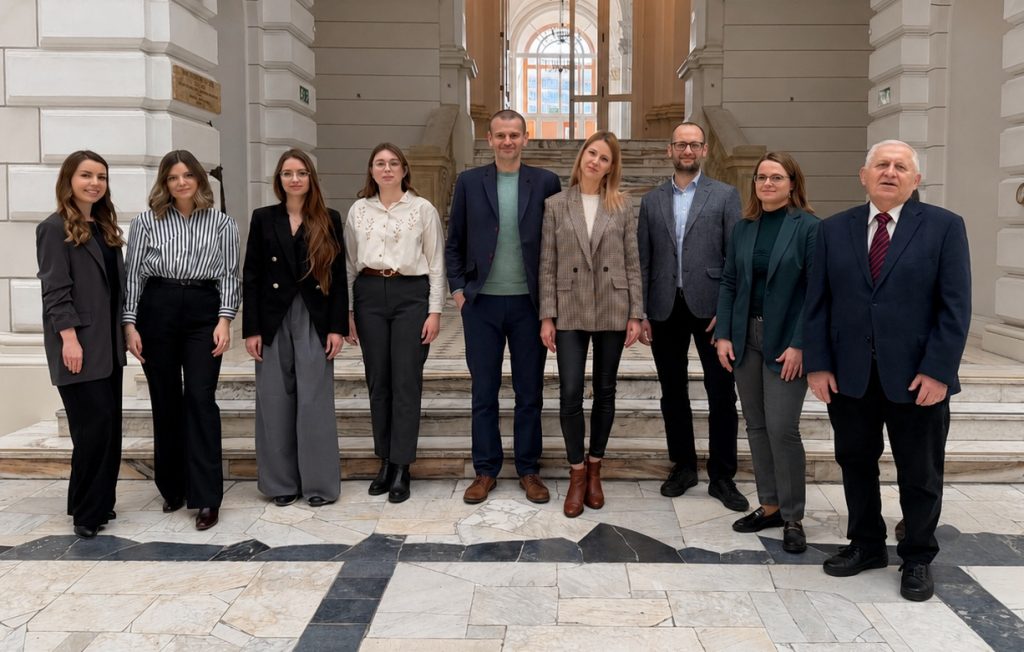
The research group, under the leadership of Prof. Zbigniew Pędzich from the Department of Ceramics and Refractory Materials, Faculty of Materials Science and Ceramics, AGH University of Krakow, included the active participation of Dr Eng. Dawid Kozień. The team specialises in the design, processing, and comprehensive characterisation of advanced ceramic materials for applications in high-temperature, structural, energy-related, and selected biomedical fields. Their expertise encompasses both oxide and non-oxide ceramics, with a particular focus on ultra-high-temperature ceramics (UHTCs), boron carbide-based materials, zirconia-based composites, and refractory ceramics designed for severe operating conditions. A significant portion of their research is dedicated to ceramic matrix composites produced through reactive sintering and related rapid sintering methods, including systems containing B₄C and MAX phases, which are optimised for enhanced mechanical performance, oxidation resistance, and thermomechanical stability.
The team possesses extensive experience in advanced powder processing, pressure-assisted sintering (including Spark Plasma Sintering/FAST), microstructural engineering, and additive manufacturing of ceramic and ceramic-matrix composites. Their research involved a comprehensive evaluation of the mechanical, thermal, tribological, and oxidation properties, supported by advanced structural and phase analyses. In the realm of energy technologies, the group develops ceramics and composites for high-temperature components, aggressive environments, and energy conversion and storage systems. Concurrently, boron-containing materials and ceramic composites have been explored for potential biomedical applications and functional uses, utilising both conventional and additive manufacturing methods to meet stringent application-driven requirements. By integrating material design with advanced processing and characterisation techniques, the group advances high-performance ceramic materials tailored for demanding industrial and emerging technological applications, including aerospace, energy, and advanced structural engineering.
Ceramic Department CEREL is one of the four independent units of the Institute of Power Engineering in Warsaw, existing since 1972. Our headquarter is located in Boguchwała near Rzeszów. CEREL is structural and functional ceramic products manufacturer mainly zirconia, alumina, nitrides, carbides, technical porcelain, mullite, steatite and cordierite. Our advanced structural ceramics is characterized by excellent mechanical properties, high abrasion resistance, high hardness, chemical corrosion resistance, low coefficient of heat conduction and stability in high temperature operation. Ceramic parts of machines and devices, insulating elements, advanced refractory ceramics elements produced by CEREL are used in the aviation superalloys casting, laboratory ceramic elements and many other products find recipients both in country and abroad in the aviation, automotive, chemical, power engineering, metallurgical, wood, paper, steel, foundry, refractory, glass, food and pharmaceutical industries. Such wide range products manufacturing from advanced technical ceramics is possible due to equipment that allows ceramic materials production with practically whole forming techniques used in the world (uniaxial pressing, isostatic pressing, extrusion, slip casting, tape casting, screen printing, low and high pressure injection moulding and many others). CEREL is equipped with modern numerically controlled machines for processing semi-finished products after forming (lathes, milling machines, drills, plotter, laser) and after sintering (grinders, milling machines) as well as a coordinate measuring machine to control the high-precision products performance.